Comprehensive septic design, commercial projects, and stormwater solutions
Comprehensive septic design services for homes and residential properties
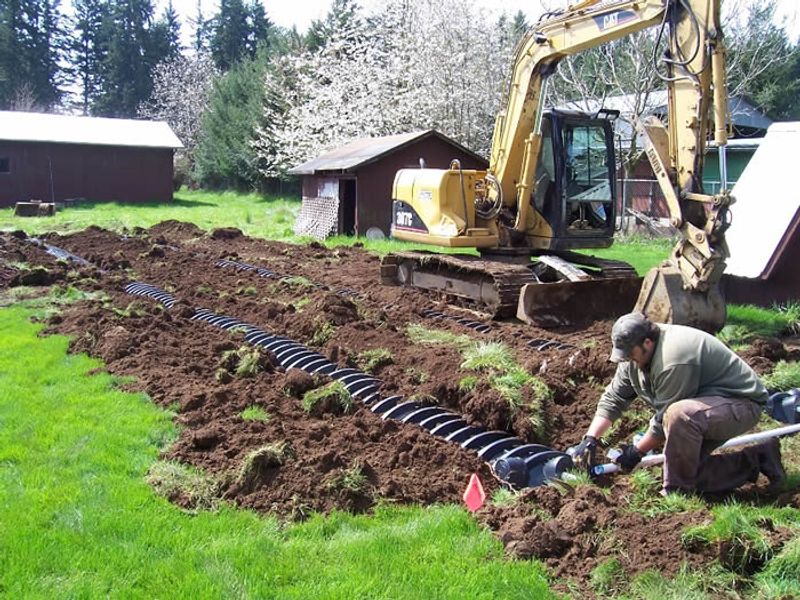
A typical residential septic system being installed in Clark County, WA
Residential projects range from a new rural subdivision requiring septic soil approvals, construction of a residence (new home or an addition to an existing home) and replacement of an older/existing septic system which has failed.
With residential projects, we're oftentimes working directly with the person who lives (or will live) in the residence. We realize you have very specific plans for your property and we want to work with you on accomplishing your goals. The first step is to meet you on site and walk the property. We'll want to know where any/all existing features are located and talk about your future plans. If you want to learn more about the process, please see our permitting process page.
We gather project details via phone or email. For new construction, we'll want a copy of your building plans. We then review county maps and historical records and schedule a site visit.
We prefer you on-site to walk the property together. We bring a mini-excavator to dig test holes for soil testing, take measurements and stake proposed locations if needed.
We prepare design calculations, drawings and an application package. In most counties, we're able to upload the permit submittal to the County permit portal saving you the hassle.
Once your system is installed, we complete a pre-backfill inspection and prepare an as-built drawing if required by your county.
Septic design for schools, parks, restaurants, and other commercial facilities
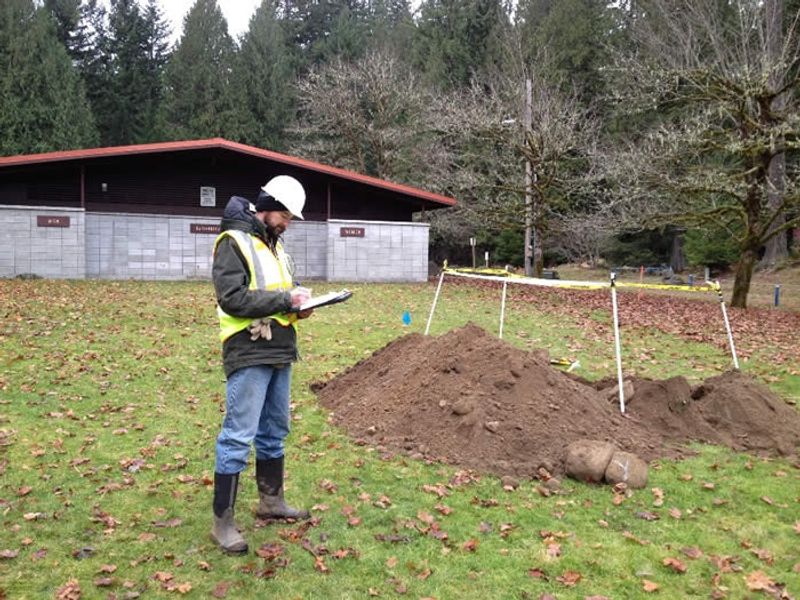
Mike Williams completing a site assessment at Cougar Park on Yale Reservoir.
Because we have an engineer on staff, EGSD does more commercial septic designs than most other septic designers in the area. This is for two reasons:
1) Engineering, Architecture and Planning companies oftentimes prefer working with a licensed engineer. Engineers typically "speak the same language" as other consultants and understand the big picture of the project.
2) State law requires an engineer (instead of a septic designer) to perform the designs of all systems with a daily flow greater than 3,500 gallons per day (LOSS or Large On-Site Sewage Systems). Finding an engineer who specializes in septic systems is difficult, as most engineers don't know the septic industry very well.
Washington State Department of Transportation
Washington State Parks
Many school districts across Clark, Cowlitz, Lewis, and Mason Counties
Clark County Parks Department
Clark County Public Works
Port of Camas/Washougal
PacifiCorp
Many commercial and industrial clients in Southwest Washington
Infiltration testing and soil reports for stormwater permitting
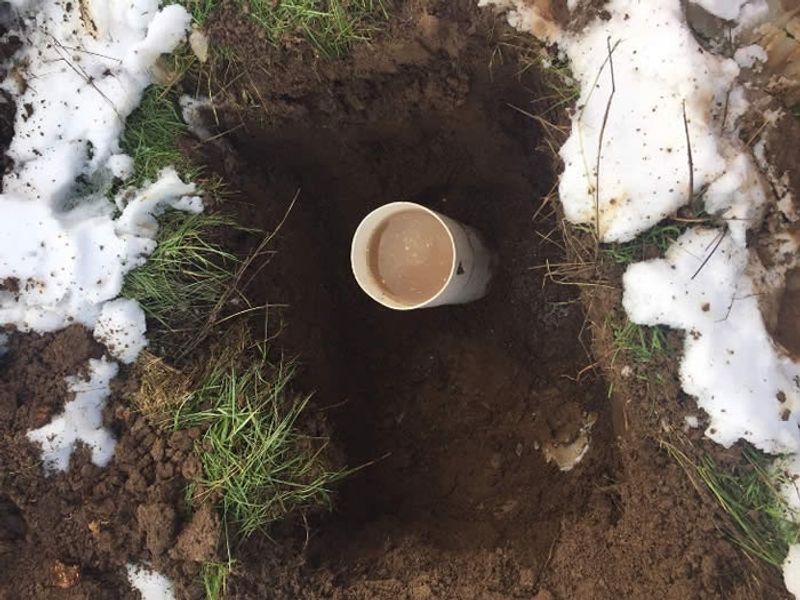
An infiltration test being conducted during a snowy winter day.
With the implementation of new regulations from the State of Washington, most local counties (including Clark County) are now being forced to require an extensive review/permit process for any new or replacement "impervious" surface (driveway, roof, etc). Part of the process oftentimes requires a detailed soil description and infiltration test. If the timing is coordinated, EGSD can perform these tests at the same time as the soil testing for septic purposes. Although the tests are very different from each other, there are efficiencies in getting them completed when an excavator is already on site.
For stormwater, the infiltration test involves placing a specific diameter pipe into the native soil at a prescribed depth from the surface. The pipe is filled with water (and re-filled as necessary) until the soil is saturated. After saturation, timed testing begins and the rate at which the water enters the soil is recorded. After multiple tests, the data is put into an equation and the "coefficient of permeability" is determined. The number is used in sizing stormwater infiltration systems.
Contact us today to discuss your project needs. We're here to help make your septic design process as smooth as possible.
Not sure which system fits your property? Compare septic system types. Want to understand what comes next? Read about the permitting process.